Our Approach to Personal Safety
Our personal safety training programs are structured around three core principles: prediction, prevention, and avoidance. The knowledge and skills
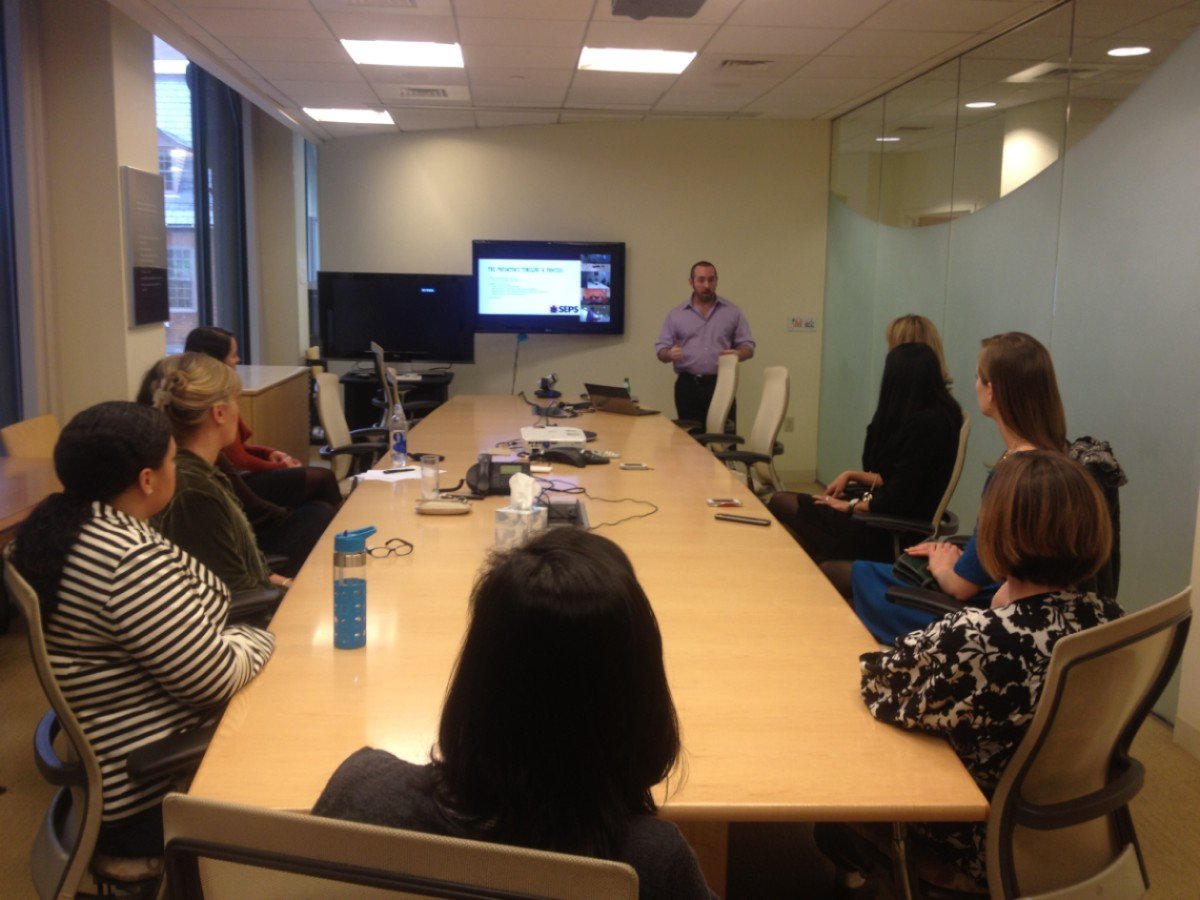
required to apply these principles can be taught effectively in a classroom, workplace, or seminar environment and do not require physical participation. A practical self-defense component,
incorporating simple physical techniques, can be added where appropriate; however, physical training is not necessary for participants to develop a significantly better understanding of
personal safety and violence prevention.
Central to our approach is the concept that violent incidents occur at the intersection of two timelines: that of the offender or aggressor and that of the person they
have selected or targeted. Neither individual arrives at the incident independently of what has occurred beforehand. The offender may have progressed through stages of identifying, assessing, selecting, approaching, and
engaging a potential target, while the targeted individual is simultaneously moving through their own sequence of locations, decisions, activities, and interactions.
Understanding these intersecting timelines allows individuals to recognize where they are within the developing incident and, equally importantly, where they may be within the
offender's decision-making and behavioral process. This creates opportunities to implement effective prevention and avoidance strategies before a situation develops into a physical confrontation.
Rather than treating violence as an unpredictable event that suddenly begins at the moment of assault, participants learn to examine the behaviors, circumstances, and decisions that can precede it.
The predictive element of the training therefore focuses on understanding the processes that offenders may use when identifying and approaching potential targets. Prediction does not
mean attempting to foresee a specific violent event with certainty. Instead, it involves recognizing behavioral patterns, environmental conditions, and situational indicators that may signal an increased potential
for harm. The earlier these indicators are identified, the greater the range of options generally available.
the objective is not simply to teach people how to respond once violence has begun, but to help them avoid reaching that stage whenever possible. If an individual can recognize and
understand an offender's developing process, they may be able to alter their own behavior, location, timing, or decisions sufficiently to prevent the two timelines from intersecting at all. In this model,
effective personal safety begins well before physical self-defense becomes necessary.
-
1
Prediction & Personal Safety
Prediction is the first component of our personal safety model and involves recognizing the behaviors, circumstances, and environmental conditions that can precede a violent or threatening incident.
Prediction doesn’t mean being able to foresee/forecast exactly when or where violence will occur. But rather, it means developing the awareness necessary to recognize when risk may be increasing and when
another person's behavior warrants greater attention.
Effective personal safety begins with understanding that many violent incidents develop through a process. An offender may identify a potential target, assess their vulnerability, observe their behavior,
and decide when and how to approach them etc. Learning to recognize elements of this process can provide valuable opportunities to act before a situation develops into a confrontation.
Prediction also involves understanding the environment e.g., isolation, limited escape options, unfamiliar surroundings, changing group dynamics, and unusual behavior can all affect personal safety etc. None
of these factors automatically indicate danger/the presence of a threat, but together they can provide useful information for assessing a situation.
The purpose of prediction is therefore not to create fear or hypervigilance. It is to improve personal safety by recognizing developing situations early enough to make informed decisions, change behavior,
and avoid unnecessary exposure to potential threats.
-
2
Prevention & Personal Safety
Prevention is the second component of our personal safety model and focuses on taking practical steps to reduce the likelihood that a potentially dangerous situation will develop into a violent incident.
Whereas prediction involves recognizing developing risks, prevention is concerned with acting on that information before the situation escalates.
Personal safety prevention strategies can involve changing behavior, increasing distance, moving to a safer location, establishing boundaries, seeking assistance, or making it more difficult for someone
to continue an unwanted approach or interaction etc. The appropriate response will depend upon the circumstances and the stage that the situation has reached.
Prevention also involves understanding how our own decisions can influence an offender's process (this doesn’t imply victim-blaming). If an offender is assessing a potential target, changes in awareness,
positioning, movement, or behavior may disrupt that assessment and cause them to reconsider their intentions etc. The objective is not to confront or challenge the individual, but to reduce opportunities
for the situation to progress.
Effective personal safety is therefore proactive rather than purely reactive. Prevention provides a bridge between recognizing a potential threat and having to respond physically to one, creating
opportunities to interrupt the developing process before violence becomes necessary.
-
3
Avoidance & Personal Safety
Avoidance is the third component of our personal safety model and represents the preferred outcome whenever a potential threat can be identified early enough. Rather than managing or responding to a dangerous
situation once it has developed, avoidance involves making decisions that prevent the encounter from occurring in the first place.
Effective avoidance depends upon information. By understanding environments, routines, behaviors, and the processes offenders may use when selecting and approaching potential targets, individuals can make informed
decisions about where they go, how they travel, and how they respond to changing circumstances. This does not mean avoiding normal activities because of fear but recognizing when a simple change can significantly
reduce unnecessary exposure to risk.
Avoidance might involve choosing a different route, leaving an environment, maintaining distance from someone whose behavior causes concern, changing a routine, or deciding not to enter a situation where several risk
factors are present.
Within our personal safety model, avoidance demonstrates why physical self-defense shouldn't be the starting point of any personal safety training. The most successful response to a violent encounter is usually the one that prevents
the encounter from developing far enough for physical skills to become necessary.