
Personal Safety Training in Boston
 Personal safety is a facet of Health and Wellness just as
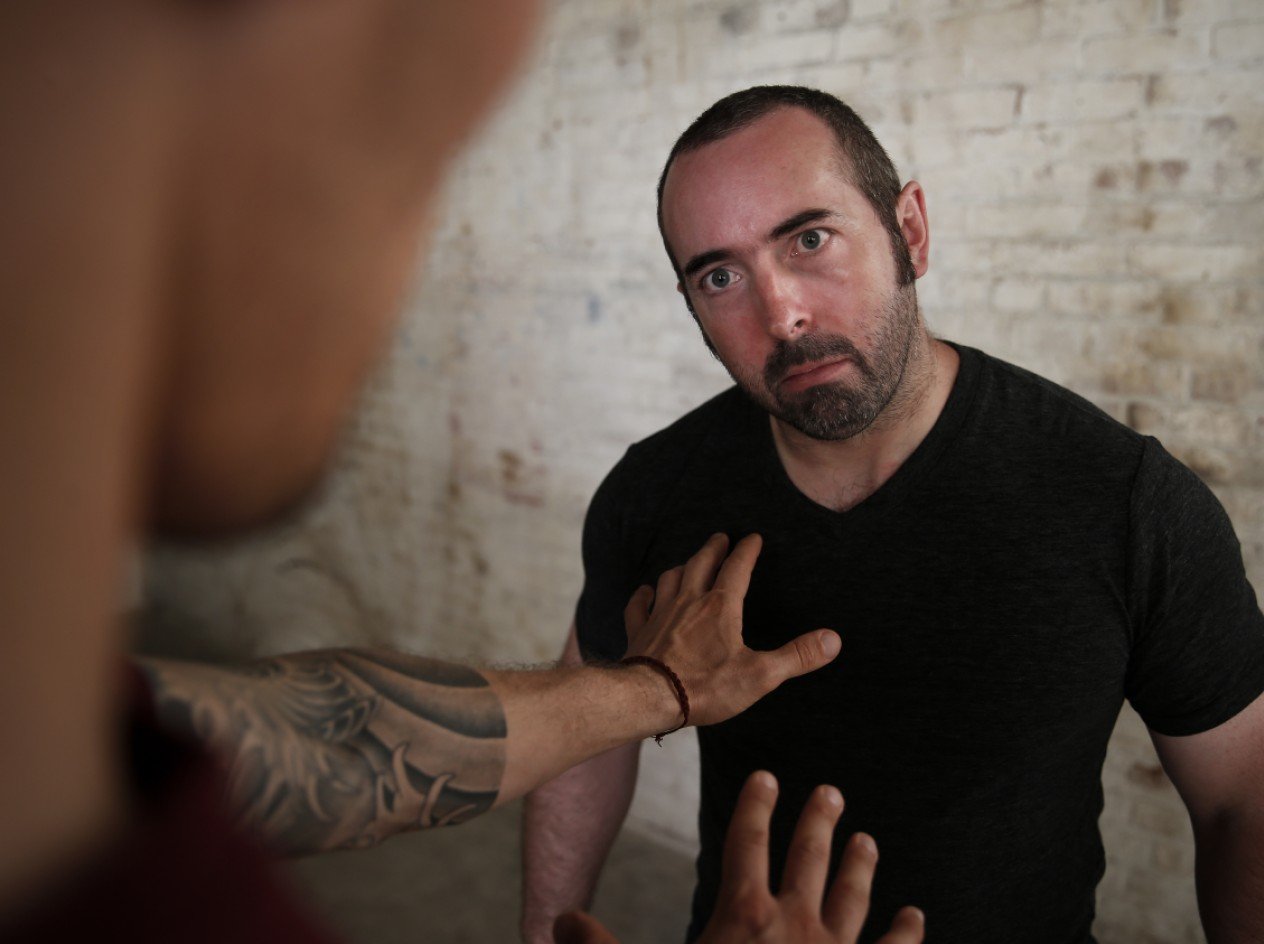
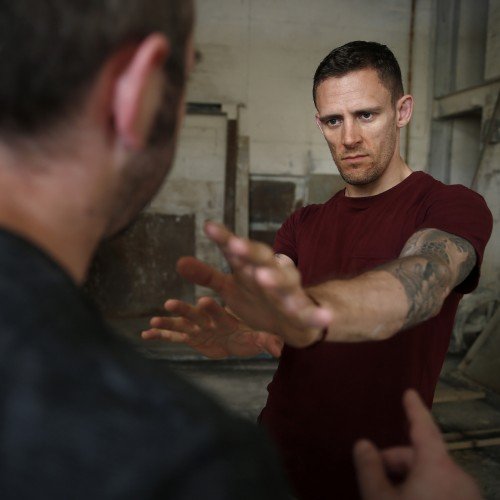
When many people think about personal-safety, they automatically think about how they would physically defend themselves if attacked. When it comes to violence we, as a species, have a tendency to think in terms of worst-case scenarios e.g.,
we’ll be attacked, late at night, on our own, in a secluded place, by a skilled/experienced aggressor etc. Often, the solution we look for is physical i.e., are there some “techniques” we can learn which would allow us to “level the playing
field” or give us an advantage over a bigger, and stronger assailant. One of the biggest selling types of information in the self-defense/martial arts industry involves “pressure points” as the idea that everyone has an accessible “Achilles Heel”
that can render them useless, simply by pressing on it is extremely appealing. Unfortunately, no such things exist, and if they did trying to apply them during a fast-moving, aggressive, real-life violent incident would be impossible/extremely
difficult to do. However, more importantly, focusing on physical solutions to violence should not be our starting point.
Our starting point should be about avoiding such situations in the first place. Learning how to physically defend ourselves takes time. There are no “magic” techniques that can be mastered in a few minutes or even a few hours. For any physical techniques to work in a real-life violent incident, “fighting skills” must first be developed, and this takes time. Sun Tzu in the “Art of War” famously said, “If you know the enemy and know yourself, you need not fear the result of a hundred battles. If you know yourself but not the enemy, for every victory gained you will also suffer a defeat. If you know neither the enemy nor yourself, you will succumb in every battle.” If we look at dealing with physical violence, most people do not know “themselves” i.e., how they would mentally, psychologically and emotionally, handle a physically violent altercation. Any short-term training would have to sanitize violence in order to achieve such a goal, and it’s likely that this may give some people a false confidence.
Predict, Prevent & Avoid Violence
 This is not to say that self-defense training doesn’t work, it just means that it takes a certain amount of training and time, before it becomes effective. However, there is a faster and easier way to improve personal-safety, and that is
learning how to predict, prevent, and avoid violence in the first place, something that is referred to as “self-protection”. Whilst self-defense is largely reactive (it is about dealing with an incident that is occurring), self-protection
is proactive and concerns itself with avoiding a situation where you have to physically defend yourself.
Whilst physical self-defense takes time, because it requires the development of physical skills, the learning of movements, and the ability to execute such things in a high stress and duress incident, self-protection skills and knowledge can be learnt quickly in a classroom type of environment, with the knowledge being retained rather than “lost” after a session/presentation ends. The knowledge and understanding of how violent offenders operate isn’t a perishable skill, in the same way that physically escaping from a strangulation, choke or headlock is.
Our Boston based trainer Gershon Ben Keren has been teaching personal-safety and self-protection internationally since 1995. He has taught countless people and organizations the skills that they need to predict, prevent and avoid violence. If you are an individual looking for training, either for you or your family, or are looking to bring such training to your company or organization, please contact us by clicking here.